The Commentator's Notebook
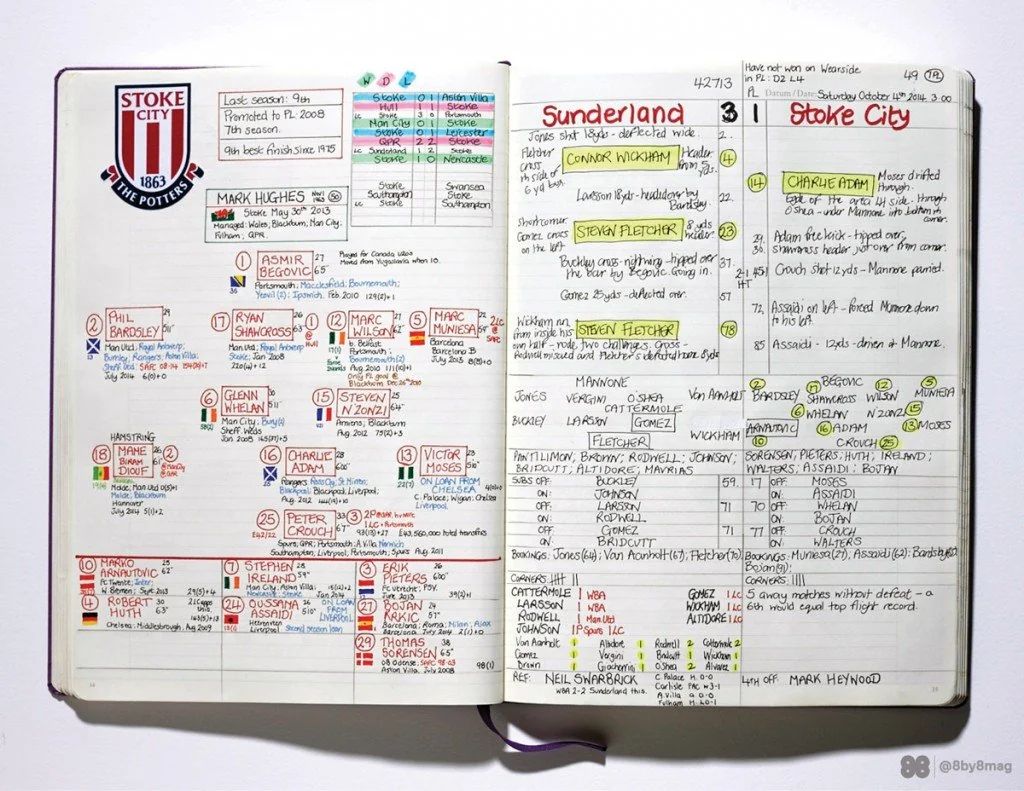
One thing that always fascinated me as a football fan was the commentator's notebook. All those pages of player notes, stats, and storylines prepared before a game, and then delivered so smoothly on the microphone.
While building our football commentary product at Liat.ai, that notebook became more than just a cool detail for us. It became a reference point. Because in the end, no matter how many models we build, what users actually experience is the voice.
And while building this, we kept coming back to one thought. Most matches in the world can't afford commentators like these. So if we wanted to build something meaningful, we had to at least try to match that experience for the leagues and teams that don't have access to it. That is why understanding how these commentators work, what they prepare, and why they are loved was an important piece of my work here at Liat.ai.
Back to the Drawing Board
We went back to the drawing board. We started studying how real commentators actually work, what they specialize in, and why certain voices are loved. Names like Peter Drury, Ray Hudson, and Martin Tyler came up naturally, but instead of trying to copy them, we focused on understanding what makes them special.
Some of it is preparation. The best commentators show up with pages of context: which player is returning from injury, which manager is on a losing streak against this opponent, which youngster might get his debut, which rivalry still carries weight from a final twenty years ago. Most of that work is invisible to the viewer. You only feel it when, in the middle of a quiet passage of play, the commentator pulls out a detail that suddenly makes the whole match feel bigger than the scoreline.
Some of it is instinct. The best commentators know when to talk and when to let the crowd carry the moment. They know the difference between a chance that deserves a raised voice and one that does not. That sense of timing is something we paid close attention to.
Two Voices, Not One
We realized that great commentary usually comes from two voices working together.
One voice lives for the moment, the one that brings the excitement, the one that makes the game feel alive. The one who shouts at goals, whether it is Peter Drury with his vocabulary, the Spanish commentator with his classic "gol gol gol," or the Arabic commentator who somehow makes you see his facial expressions through his voice alone. That voice is often the reason people prefer watching on TV over being in the stadium.
"Great commentary comes from two voices. One lives for the moment. The other gives the game its meaning."
Then there is the other voice, the one that gives meaning to the game. The one who tells you why the match matters, who knows the players, the stats, and the context, who fills in the quiet moments. When the game slows down, this is the voice that keeps you engaged, talking about how teams are shaping up, how they might break into the final third, which player has the ability to create something out of nothing.
Both voices need to be in sync. They need personality. They need to complement each other. That is what makes commentary feel real, and that is what we were trying to reach.
Meet Gary and Marcus
After months of iteration, testing countless voices, and refining prompts, we arrived at our English commentary duo, Gary and Marcus. The two voices work together to bring context and excitement to the game in real time.
Marcus is the excited play-by-play voice. He lives in the moment. He rises with the chance, breaks with the tackle, and finds the right word for the goal before the ball has even settled in the net. Gary is the calm colour voice. He carries the notebook. He brings the form, the history, the tactical read, the half-time storyline that turns the second half into something worth following.
We wanted two commentators who seem to care about the match they are commentating on.
What Comes Next
Gary and Marcus are our English duo, and the same thinking applies across the 20+ languages Liat.ai commentates in. Each language has its own commentator, with its own rhythm and its own way of celebrating a goal. We do not translate English commentary into other languages.
The notebook is still the reference point. Every match has a story worth telling, and most of them never get told. That is the gap we are trying to close.
You can hear Gary and Marcus on our commentary page, along with the voices Liat.ai commentates with in other languages.